



From our family to yours
Leave your email and receive exclusive content
Does natural ventilation work during winter?
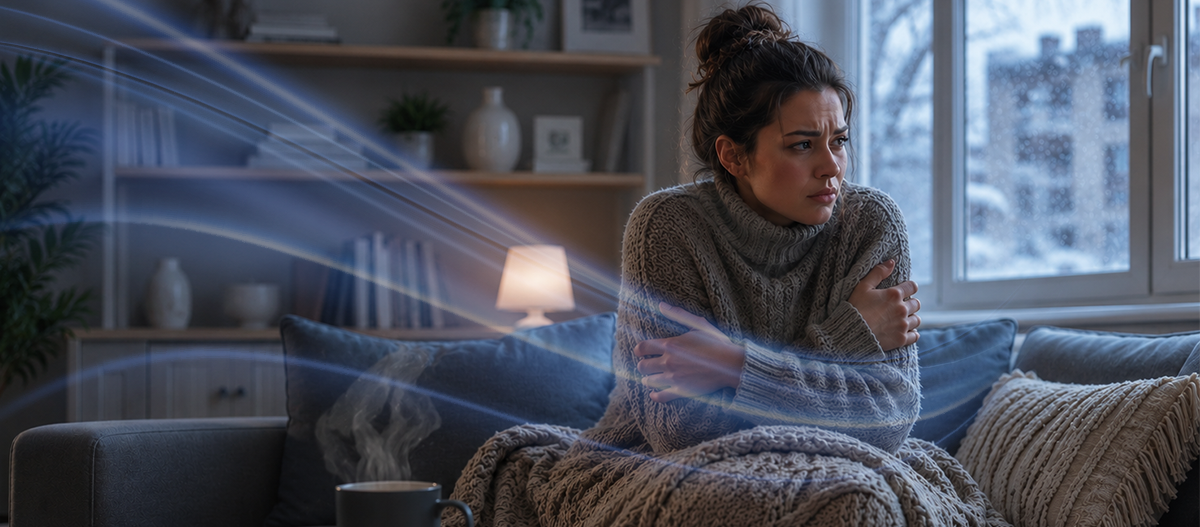
During winter, it is common to keep doors and windows closed to preserve heat and increase thermal comfort. However, many people wonder: does natural ventilation during winter really work?
The answer is: it depends on the environment, outdoor air quality, and how ventilation is used. Although opening windows is still important for air renewal, relying solely on natural ventilation during winter is not always enough to ensure thermal comfort, indoor air quality, and well-being.
In addition, factors such as pollution, humidity, airflow, and prolonged time spent in closed environments can significantly reduce the effectiveness of this strategy.
What is natural ventilation?
ANatural ventilation occurs when air circulates through indoor spaces without the help of mechanical equipment, using openings such as doors, windows, and architectural elements.
It mainly depends on:
- Cross ventilation;
- Temperature differences;
- Wind direction;
- Building geometry;
- Frequency of opening indoor spaces.
When properly applied, natural ventilation helps renew indoor air, reducing stuffiness and improving occupant comfort.
Natural ventilation during winter may not be enough
Although important, natural ventilation during winter has some limitations.
During colder days, people tend to keep indoor environments closed for long periods. As a result, indoor pollutants, humidity, odors, dust, and airborne particles accumulate.
In addition, in regions with lower temperatures or high levels of outdoor pollution, keeping windows open constantly may not be the most comfortable or efficient solution.
Studies show that enclosed spaces with poor air renewal contribute to respiratory discomfort, fatigue, headaches, and increased concentrations of indoor contaminants.
Indoor air quality also matters during winter
During winter, the focus is often placed only on thermal comfort. However, indoor air quality also deserves attention.
According to studies on ventilation and air pollution, indoor environments can accumulate fine particles, volatile organic compounds (VOCs), dust mites, fungi, and invisible pollutants harmful to health.
Furthermore, research shows that natural ventilation can lose efficiency in areas with high levels of outdoor pollution, since contaminated air also enters the environment.
For this reason, balancing ventilation, filtration, and air renewal becomes even more important during winter.
So, is it worth opening the windows?
Yes. Even during winter, opening windows at certain times of the day remains essential to allow air exchange and reduce the concentration of indoor contaminants.
However, natural ventilation during winter works better when combined with other strategies that help maintain comfort and indoor air quality without major heat loss.
These include:
- Air renewal systems;
- Indoor air filtration;
- Proper exhaust systems;
- Humidity control;
- Ventilation systems.
These solutions help maintain air circulation even when windows stay closed for longer periods.
Mechanical ventilation can complement natural ventilation
Experts point out that mechanical ventilation does not necessarily replace natural ventilation, but it can enhance its efficiency. In residential spaces, offices, clinics, and environments with low natural airflow, air renewal systems help maintain healthier and more comfortable indoor spaces during winter.
In addition, compact and quiet solutions allow continuous air renewal without compromising thermal comfort.
Sicflux offers solutions that support indoor air renewal and circulation during winter.
Product lines such as Splitvent, Sonora EC, Maxx, and compact supply fans help promote continuous ventilation with low noise levels and greater energy efficiency. These solutions are ideal for houses, apartments, home offices, clinics, and environments that remain closed for long periods during cold days.
Ventilation remains essential during winter
Natural ventilation during winter remains important, but it cannot always meet all comfort and air quality needs on its own.
For this reason, combining natural ventilation with intelligent air renewal and filtration solutions may be the best alternative for maintaining healthier, more comfortable, and safer indoor environments throughout the season.

Receive exclusive content for free
Comentários